
Changing your energy supplier is a simple and effective way to reduce monthly utility bills without sacrificing reliability.
Key Takeaways
- Switching providers does not affect reliability because your local utility company continues to deliver the power and maintain the lines.
- Review your current contract’s terms before making a move to avoid unexpected early termination fees or billing overlap.
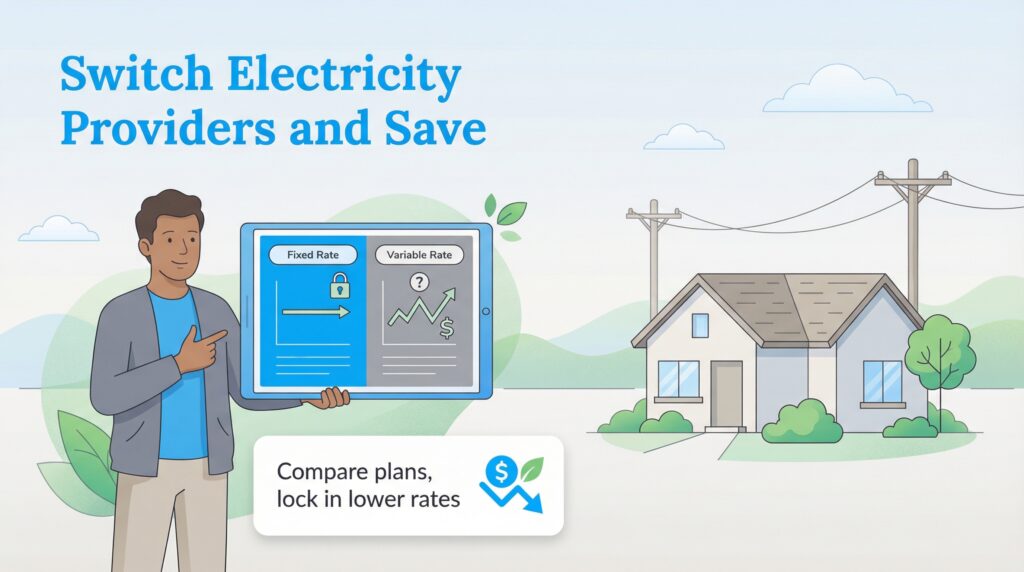
- Comparing fixed versus variable rates is the most critical step in securing long-term savings and stability for your household budget.
If you live in a deregulated energy market, you have the power to choose who supplies your electricity, yet many homeowners stick with their default provider out of habit or fear of the unknown. Switching electricity providers is often the fastest way to lower your monthly utility costs, access renewable energy plans, and lock in a more stable rate for your home. While the process might sound technical, it is actually quite straightforward once you understand a few key terms and know what to look for in a contract. By taking control of your energy choice and deciding to switch energy suppliers, you can stop overpaying for the exact same electricity you are already using.
Can You Switch? Understanding Energy Deregulation
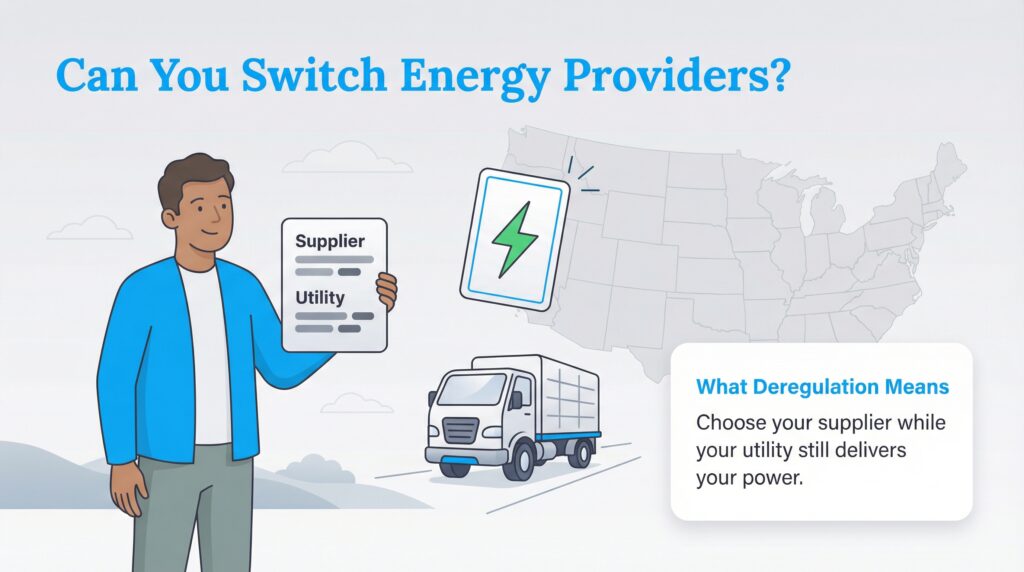
Before comparing rates, confirm that you live in an area where energy choice is available. Energy deregulation separates the company that generates the electricity from the company that delivers it, allowing you to shop around for the generation portion of your bill. The same local utility delivery trucks and infrastructure will bring power to your house, regardless of which supplier you select.
Currently, several states offer electricity choice for residential customers. Some of the top deregulated markets include:
Availability often depends on your specific utility service area. If you aren’t sure about your status, you can check your eligibility by visiting the U.S. Energy Information Administration (EIA) page regarding restructuring.
Utility vs. Supplier: Who Does What?
A common point of confusion during the switching process is the difference between your local utility and your retail energy supplier. Understanding this distinction is essential because it dictates who you call during an outage versus who you contact about a billing question.
| Responsibility | Local Electric Utility | Energy Supplier (Provider) |
|---|---|---|
| Primary Role | Delivers power to your home. | Generates or purchases the power. |
| Infrastructure | Owns and maintains poles, wires, and meters. Restores power during outages. | Does not own power lines or physical grid equipment. |
| Pricing | Charges fixed delivery fees regulated by the state. | Sets the supply rate per kWh based on market competition. |
| Consumer Choice | Assigned by your geographic location (cannot be changed). | Chosen by you in a deregulated energy market. |
Why Change Electricity Providers?
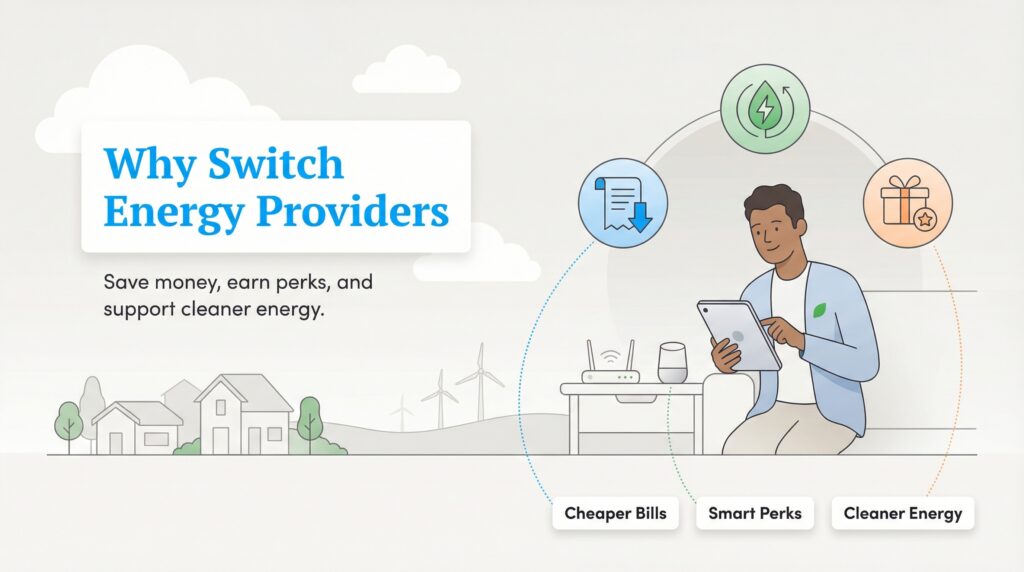
While securing a lower monthly bill is the primary motivator for most people, exploring the cheapest electricity provider options can open the door to several other significant benefits tailored to your lifestyle. You might consider making a switch for the following reasons:
- Moving to a New Home: Setting up service at a new address is the perfect time to evaluate the market and secure a competitive rate rather than accepting a default plan.
- High Renewal Rates: Suppliers often reserve their best pricing for new customers. If your introductory rate is expiring, switching can prevent a sudden price hike.
- Poor Customer Service: If your current provider struggles with billing transparency or responsiveness, moving to a highly rated competitor can save you time and frustration.
- Switching to Green Energy: Eco-conscious households can easily transition to 100% renewable energy plans (backed by wind or solar credits) without installing physical solar panels on their property.
When is the Best Time to Switch Providers?
Timing your switch correctly is a crucial factor in securing the cheapest rates while avoiding unnecessary fees. Wholesale electricity prices fluctuate throughout the year based on supply and demand. The best times to lock in a new rate are typically during the “shoulder seasons” — spring (March through May) and fall (September through November). During these months, mild weather reduces the demand for intense heating and air conditioning, which often causes suppliers to lower their rates to attract new customers.
Additionally, you must monitor your current contract’s expiration date. Most states enforce a 14-day grace period prior to your contract’s end date. If you initiate a switch during this specific window, you can transition to a new provider without being charged an early termination fee. Waiting until you are within this window is the smartest financial move.
How to Switch Electric Companies in 5 Steps
Switching electricity providers is a digital process that rarely requires a phone call or a technician visit. Follow these sequential steps to ensure a seamless transition from your old supplier to your new one.
1. Check Your Current Contract and Grace Periods
Review your existing electricity bill or log in to your current provider’s portal to verify when your contract expires. If you are in the middle of a fixed-term contract, you may be subject to a costly early termination fee for leaving before the agreed-upon end date. It is almost always cheaper to wait until your contract is within the allowed grace period than to pay a hefty penalty fee just to switch a few months early.
2. Gather Your Energy Consumption History
Look at your last 3 to 12 months of electricity bills to find your average monthly energy consumption in kilowatt-hours (kWh). Knowing whether your household averages 500, 1,000, or 2,000 kWh a month is vital because advertised rates often change based on specific usage tiers. If you choose a plan designed for a large home but you live in an apartment, you could end up paying a much higher rate per kWh than expected.
3. Compare Electricity Rates (Fixed vs. Variable)
Use your state’s official shopping website, like PowerToChoose.org in Texas or PAPowerSwitch in Pennsylvania, to compare electricity rates available in your ZIP code. When comparing options, you will encounter two primary types of plans: a fixed-rate plan and a variable-rate plan.
| Feature | Fixed-Rate Electricity Plan | Variable-Rate Electricity Plan |
|---|---|---|
| Rate Stability | Price per kWh stays exactly the same for the length of the contract. | Price per kWh fluctuates monthly based on the wholesale energy market. |
| Contract Length | Usually requires a 6, 12, 24, or 36-month commitment. | Typically month-to-month with no long-term commitment. |
| Best For | Predictable budgeting and protection against seasonal price spikes. | Short-term living situations or taking advantage of temporary market dips. |
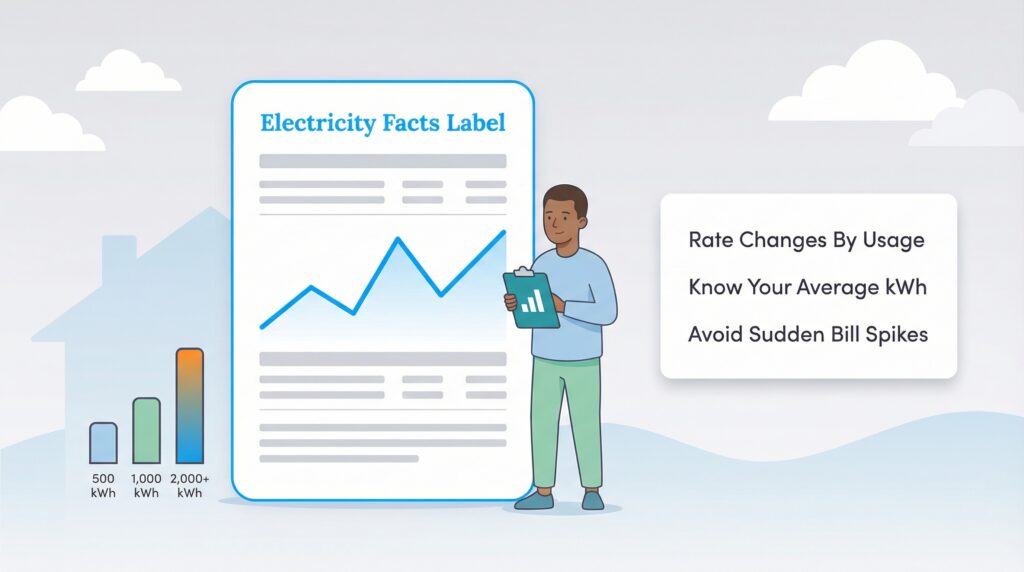
Before making a final choice, you must examine the electricity facts label for your chosen plan. This standardized document reveals any hidden charges and breaks down exactly what you will pay per kWh based on your precise usage levels. Mastering the details on this label is a crucial part of lowering your daily usage costs and dodging unexpected bill shock.
4. Vet the Provider & Check Satisfaction Guarantees
Before clicking “sign up,” research the provider’s reputation for billing transparency and customer support. Look for suppliers that offer a satisfaction guarantee, which legally allows you to switch away without penalty within the first 30 to 90 days of a new contract if you are unhappy with the service. If you are relocating, verify if the provider offers same-day or next-day setup options to ensure your new home has power exactly when you need it.
5. Enroll and Let the Provider Handle the Rest
Once you select a plan, you will fill out a straightforward online enrollment form. The new supplier handles all communication with your local utility to transfer the service securely. In almost all circumstances, the entire transition happens automatically in the background without causing a momentary blip in your home’s power.
Common Myths About Switching Energy Providers
Fear of hidden complications keeps many consumers from exercising their right to choose. Let’s debunk the most common misunderstandings in a deregulated market:
- Myth: I will lose power or experience interruptions when I switch.
Fact: The local utility company still owns and maintains the power lines. Your physical service remains exactly the same, and your lights will not flicker during the switchover. - Myth: A technician needs to visit my home to install new wires.
Fact: Switching is purely a financial and administrative transaction on your bill. It requires no physical changes to your home’s wiring or meter. - Myth: If the power goes out, my new supplier won’t fix it.
Fact: If a storm knocks out a transformer, you will continue to call your local utility company for repairs, just like your neighbors do. For more information on how the grid operates, visit our electricity hub.
Preparing for Your Next Energy Bill
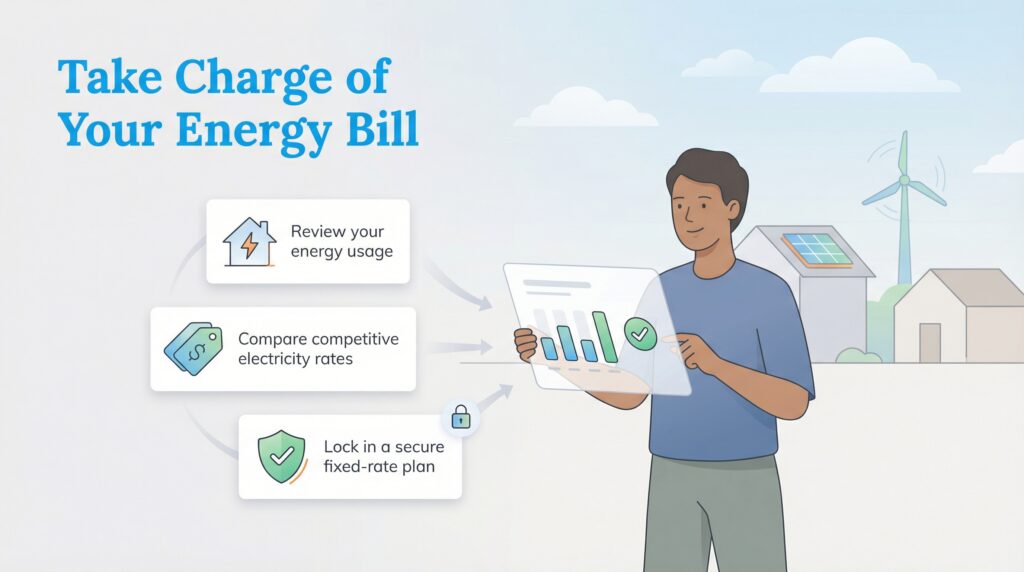
Taking the time to switch electricity providers is one of the most practical strategies to manage your household budget. By reviewing your current energy consumption, utilizing your state’s shopping tools to compare competitive rates, and locking in a secure fixed-rate electricity plan, you gain peace of mind knowing your monthly costs are under control. The process is entirely digital, seamless, and ultimately designed to put the power of choice back into your hands.
Frequently Asked Questions About Switching Electricity Providers
Will I lose power when I switch electricity providers?
No, your power will not go out during the switching process. The transition is purely administrative and typically takes place on your next meter reading date. Your local utility company continues to deliver electricity to your home without interruption.
Do I need to contact my current provider to cancel?
In most situations, you do not need to contact your old provider. When you enroll with a new energy supplier, they will automatically notify your local utility, which then triggers the cancellation with your previous provider.
Does switching providers cost money?
The act of switching is free. However, if you are currently locked into a fixed-term contract that hasn’t expired, you may be charged an early termination fee. Always review your existing contract terms or wait for your fee-free grace period before switching.
When is the best time to switch electricity providers?
The most optimal time to switch is during the mild weather months of spring and fall. These “shoulder seasons” typically see lower wholesale energy demand, which often leads to cheaper fixed-rate electricity plans being offered by suppliers.
Can I schedule my switch in advance if I am moving?
Yes, most suppliers allow you to schedule your service start date up to 60 days in advance. Setting this up early ensures your new home has power running the moment you move in.
Can I switch to a 100% renewable electricity plan without installing solar panels?
Absolutely. You can select a renewable supply plan backed by wind or solar energy credits from the grid. This allows you to support green generation effortlessly. Explore more green options on our solar and renewables page.
What happens if my electricity provider goes out of business?
If your retail supplier closes, your service will not be cut off. In deregulated markets, you are automatically transitioned to a “Provider of Last Resort” (usually your local utility) to ensure continuous power while you shop for a new plan.
About the Author

Claudio is a sustainability-focused writer with a background in Anthropology and Psychology from NC State University. He has spent over 15 years working in writing, interpretation, and translation, driven by a deep interest in how human culture shapes the environment. Today, he shares his curiosity with readers by writing about sustainable living solutions and the connection between everyday choices and environmental impact.